Why it’s extraordinary
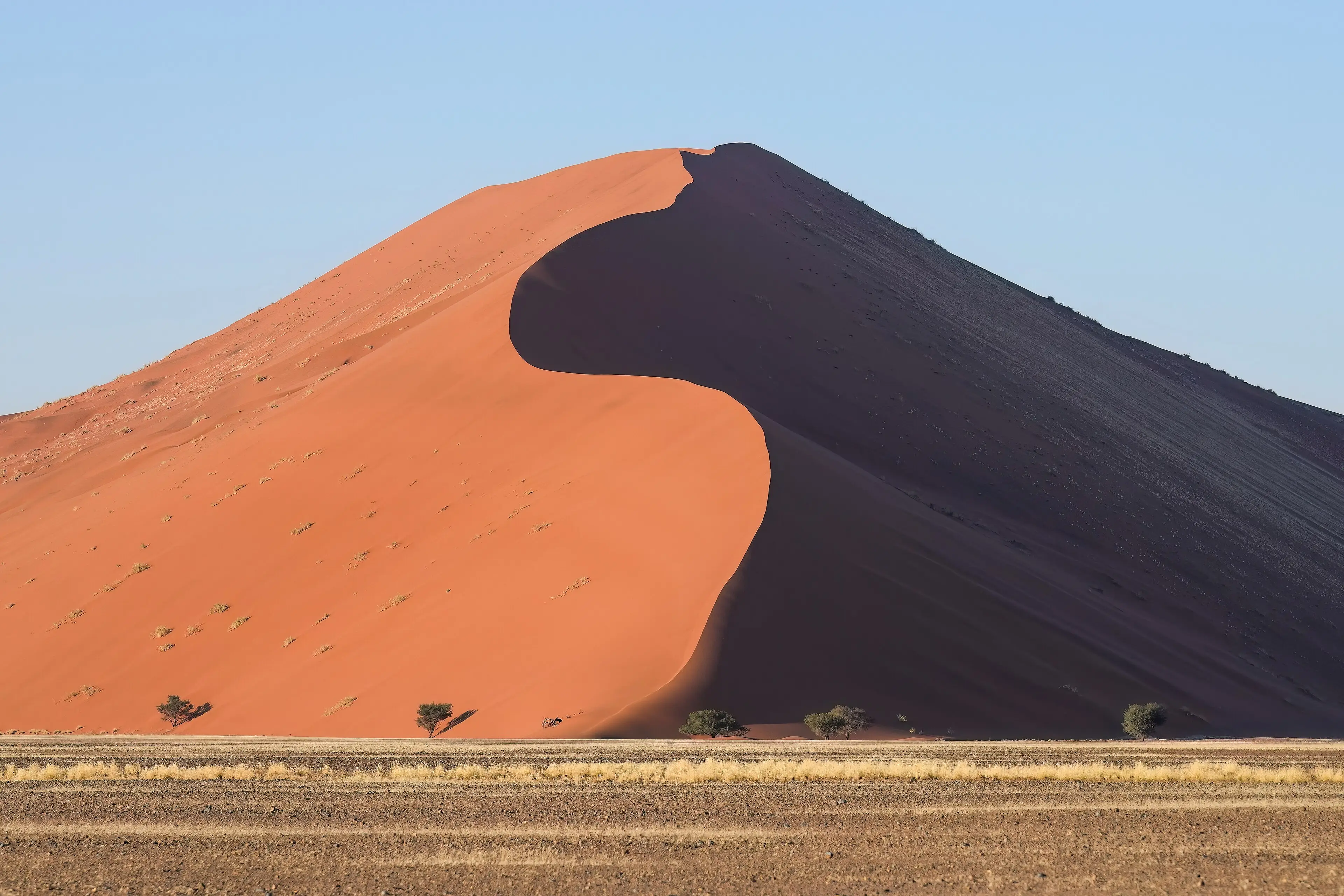
Most of the world’s great sand seas are made of rock that crumbled more or less where it lies. The Namib is different, and that difference is why UNESCO added it to the World Heritage List in 2013. Its sand was delivered. UNESCO describes a three-part “conveyor system”: rivers eroded material from deep in the African interior, ocean currents carried it along the coast, and wind finally piled it inland into one of the most spectacular dune fields on the planet — the end of a journey of thousands of kilometres.
The result covers more than three million hectares inside Namibia’s Namib-Naukluft Park, with a buffer zone of nearly 900,000 hectares more.
Fog in the desert
UNESCO calls the Namib Sand Sea the only coastal desert in the world with extensive dune fields influenced by fog. UNESCO identifies fog as the primary source of water in the site — the basis of an environment where endemic invertebrates, reptiles and mammals have adapted to a constantly shifting mosaic of microhabitats.
Old dunes beneath new ones
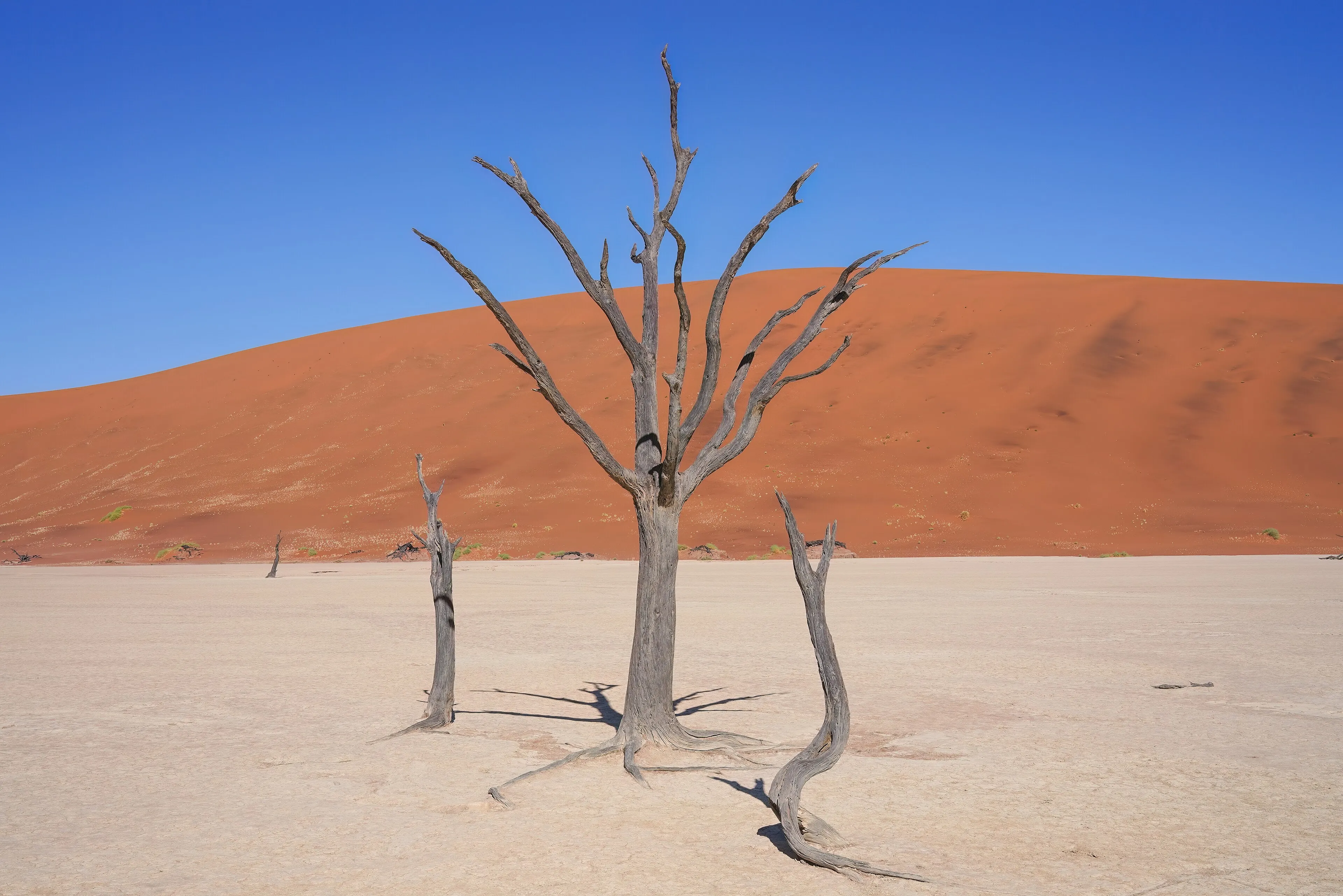
What you see on the surface is only the latest layer. According to UNESCO, the sand sea consists of two dune systems: an ancient, semi-consolidated one, overlain by a younger set of active dunes that are still moving. Around them lie gravel plains, coastal flats, rocky hills and inselbergs, plus a coastal lagoon and ephemeral rivers. Our photographs show the best-known dune area, around Sossusvlei, where dead trees stand on a pale clay pan beneath red dunes.
Why it matters beyond Namibia
UNESCO calls the Namib Sand Sea an outstanding example of the scenic, geomorphological, ecological and evolutionary consequences of wind-driven processes. Put simply, it is one of the best places on Earth to see what wind can do when it has sand, time and space to work with — and to watch living things adapt to the result.
Planning notes
This is remote desert country. We have not yet verified seasonal guidance or current park access rules from an official Namibian source, so this page stays in preview until we can. We don’t list permit prices here; check official sources before you go.
When to go
Seasonal guidance is still being verified against official sources. We don’t publish season tips, dates or prices until they are.
Share this place
Sources
- UNESCO World Heritage Centre — Namib Sand Sea — accessed 2026-10-16
- Wikipedia — Sossusvlei (coordinates only) — accessed 2026-10-16
Last verified 2026-10-16 · Written by WonderAtlas Editors. Original editorial text; no first-hand visit is claimed. How we work.