Why it’s extraordinary
Scale is the first thing to understand about the Great Barrier Reef. UNESCO describes it as the world’s largest collection of coral reefs: some 2,500 individual reefs and more than 900 islands, strung along about 2,000 kilometres of Queensland’s coast. The World Heritage property covers roughly 348,000 square kilometres, running from the low-water mark on the mainland out to waters more than 2,000 metres deep beyond the continental shelf.
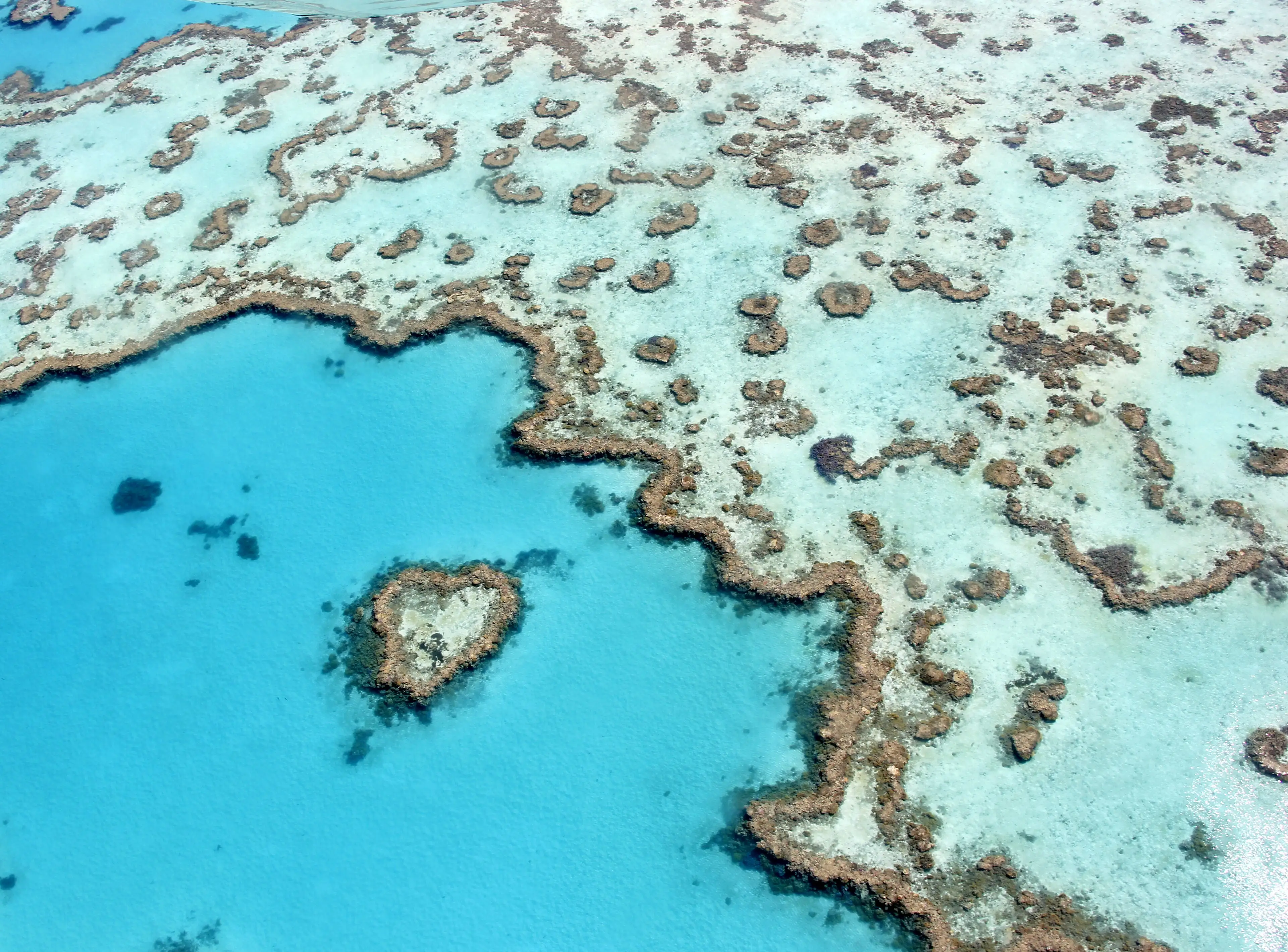
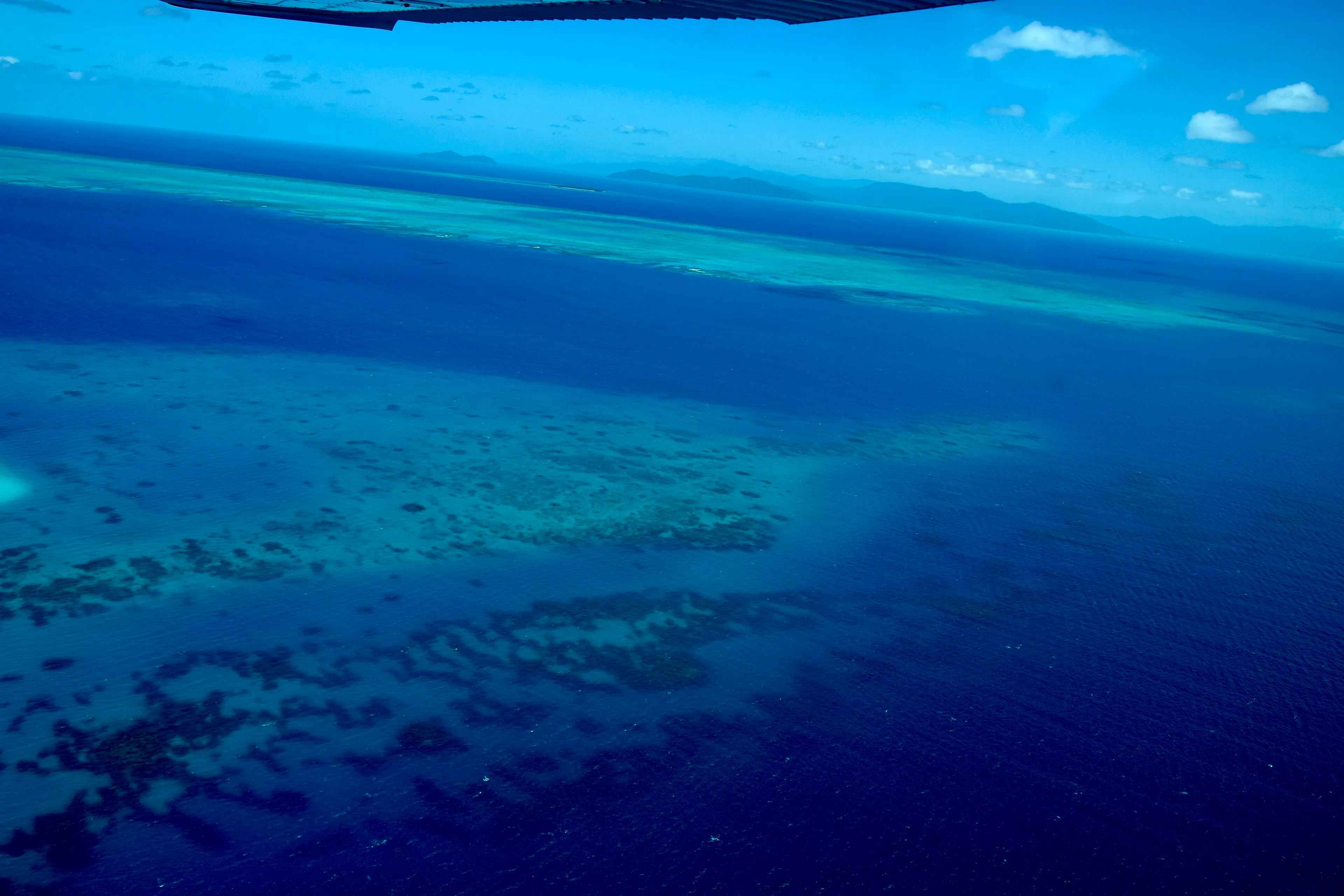
That range of depths is what makes the reef so varied. Shallow inshore areas, mid-shelf reefs, outer reefs and open ocean all sit within one protected area. From the air, the patterns are startling — the heart-shaped reef in our hero image is one small formation among thousands.
A census of the sea
The numbers UNESCO lists read like an inventory of the ocean: around 400 types of coral, 1,500 species of fish and 4,000 types of mollusc. Six of the world’s seven species of marine turtle occur on the reef, and Raine Island is the largest green turtle breeding area on Earth. At least 30 species of whales and dolphins have been recorded, and the reef is a significant calving area for humpback whales. Its seagrass meadows feed one of the world’s largest populations of the threatened dugong.
Natural spectacles
UNESCO also singles out events, not just species: the annual coral spawning, migrating whales, nesting turtles and large spawning gatherings of fish. On many of the cays, seabirds and marine turtles breed in globally important colonies.
Islands above the reef
The reef is not only underwater. UNESCO notes that its continental islands include rainforest gullies, such as those on Hinchinbrook Island that are periodically wrapped in cloud, and that large gatherings of over-wintering butterflies occur on some of them. Mangroves and many seagrass species fringe the coast, linking land and sea into a single, enormous system.
Planning notes
The reef is vast, so where you go matters as much as when. We have not yet verified seasonal guidance — including weather patterns and marine stinger safety advice — from an official Australian source, so this page stays in preview until we can. We don’t list tour prices here; check current official advice before you go.
When to go
Seasonal guidance is still being verified against official sources. We don’t publish season tips, dates or prices until they are.
Share this place
Sources
- UNESCO World Heritage Centre — Great Barrier Reef — accessed 2026-10-16
- Wikipedia — Great Barrier Reef (coordinates only) — accessed 2026-10-16
Last verified 2026-10-16 · Written by WonderAtlas Editors. Original editorial text; no first-hand visit is claimed. How we work.