Why it’s extraordinary
Mount Fuji is one of the most recognisable mountains on Earth, but UNESCO did not list it for its shape. It was inscribed in 2013 as a cultural site — “Fujisan, sacred place and source of artistic inspiration” — because of what people have made of it over close to a thousand years.
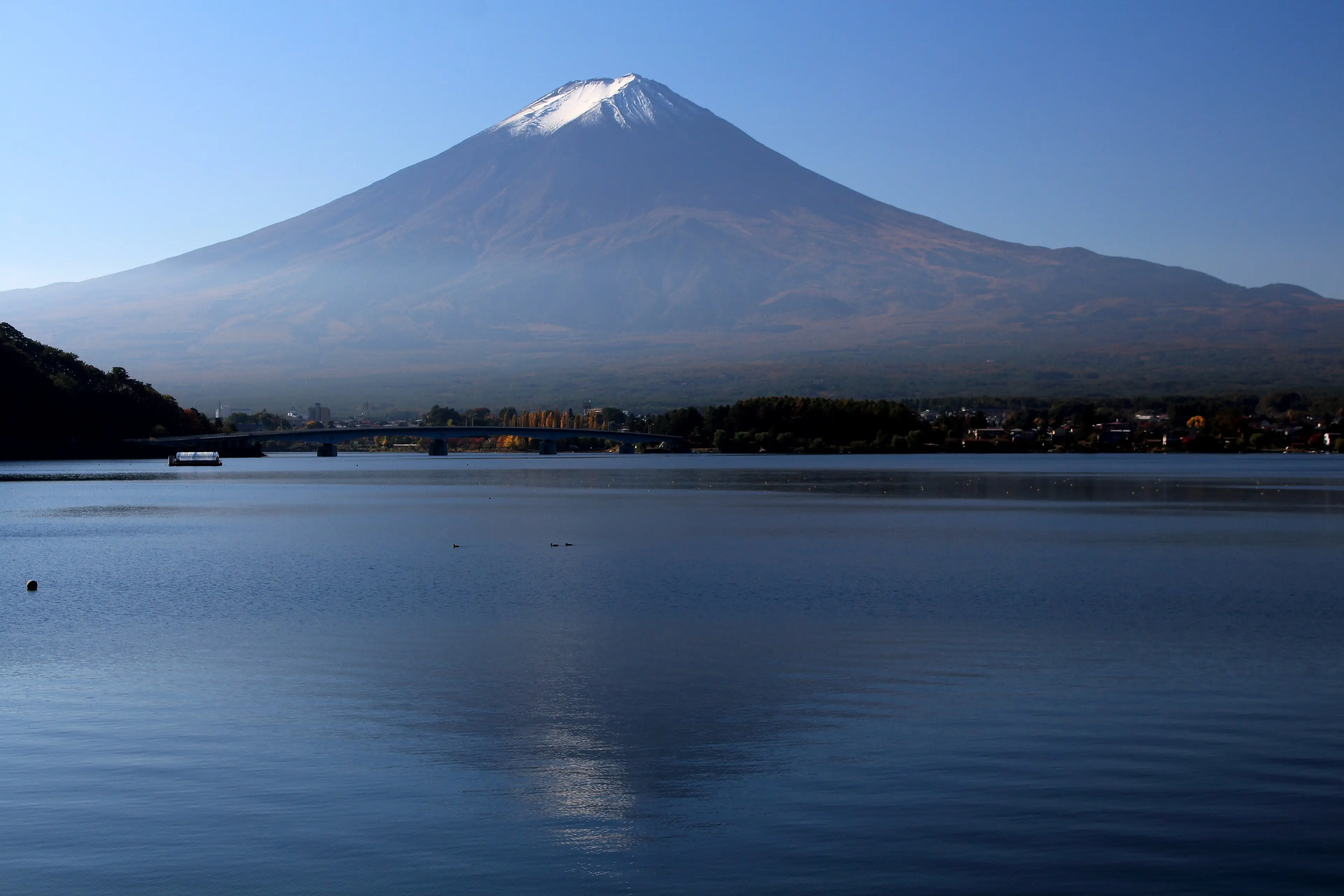
The mountain itself is a solitary stratovolcano rising to 3,776 metres, roughly 100 kilometres south-west of Tokyo, often snow-capped and visible across lakes, villages and coastline. That isolation is the point. With nothing around it of comparable height, Fuji became a focus for worship and a subject artists could return to again and again.
A mountain of pilgrims
By the 12th century, according to UNESCO, Fujisan had become a centre of training for ascetic Buddhism blended with Shinto practice. The World Heritage property is not one site but 25: pilgrim routes and crater shrines on the upper slopes, and around the base the Sengen-jinja shrines, the traditional lodging houses that once hosted pilgrims, and natural features revered as sacred — lakes, springs, waterfalls and lava tree moulds.
Reading the slopes
It helps to know where the sacred sites are. UNESCO places the pilgrim routes and crater shrines on the upper 1,500-metre tier of the mountain, while the shrines, lodging houses and sacred springs and lakes sit around its base. A walk around the lakes at Fuji’s foot is, in that sense, as much part of the World Heritage site as the summit.
The view that went global
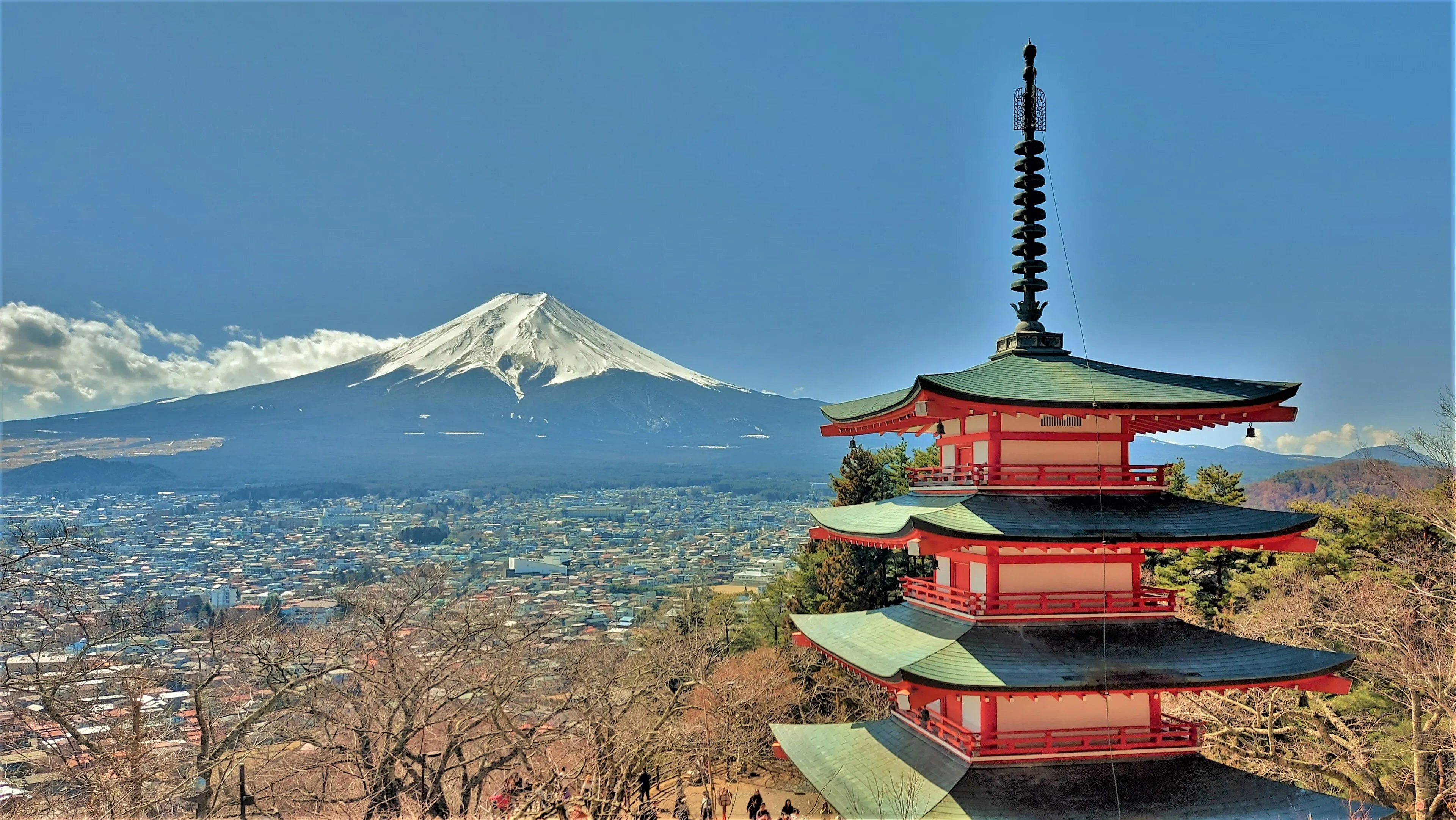
Fuji has appeared in Japanese art since at least the 11th century. It was 19th-century woodblock prints, though, that turned it into an international icon. UNESCO notes that those prints — views from beaches lined with pine groves among them — had a deep influence on the development of Western art. Many of the classic viewpoints still frame the mountain over water, as in our photograph from Lake Kawaguchi.
Planning notes
Climbing Fuji is strictly seasonal. The official climbing website states that the season runs until September 10, that the 2026 season has ended, and that the main trails are closed in winter. It also warns plainly that climbing outside the season is dangerous. Outside the climbing window, the mountain is best enjoyed from below — from the lakes and shrines at its foot. We don’t list hiking fees here; check the official website before you go.
Verified practical notes
- Climbing trails: Four official routes: Yoshida, Subashiri, Gotemba and Fujinomiya (Official Website for Mt. Fuji Climbing, checked 2026-10-16)
When to go
- Climbing season: The official climbing season runs until September 10; the 2026 season has ended and the mountain is currently closed to climbers (Official Website for Mt. Fuji Climbing)
- Winter: The Yoshida, Subashiri and Gotemba trails (5th station to summit) and the Fujinomiya trail (6th station to summit) are closed in winter (Official Website for Mt. Fuji Climbing)
- Off-season risk: The official site warns that climbing outside the season is dangerous (Official Website for Mt. Fuji Climbing)
Share this place
Sources
- UNESCO World Heritage Centre — Fujisan, sacred place and source of artistic inspiration — accessed 2026-10-16
- Official Website for Mt. Fuji Climbing — accessed 2026-10-16
- Wikipedia — Mount Fuji (coordinates only) — accessed 2026-10-16
Last verified 2026-10-16 · Written by WonderAtlas Editors. Original editorial text; no first-hand visit is claimed. How we work.