Why it’s extraordinary
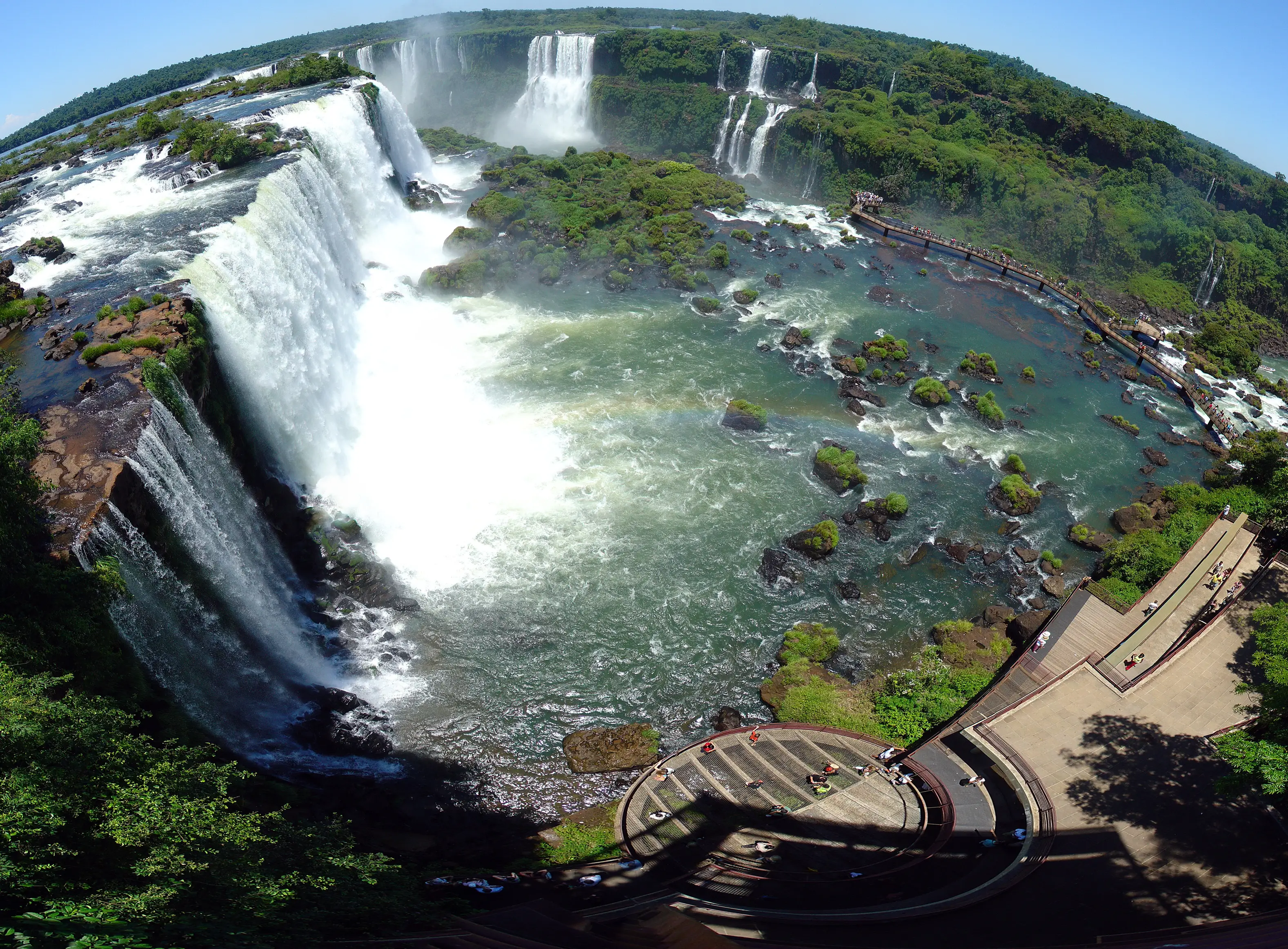
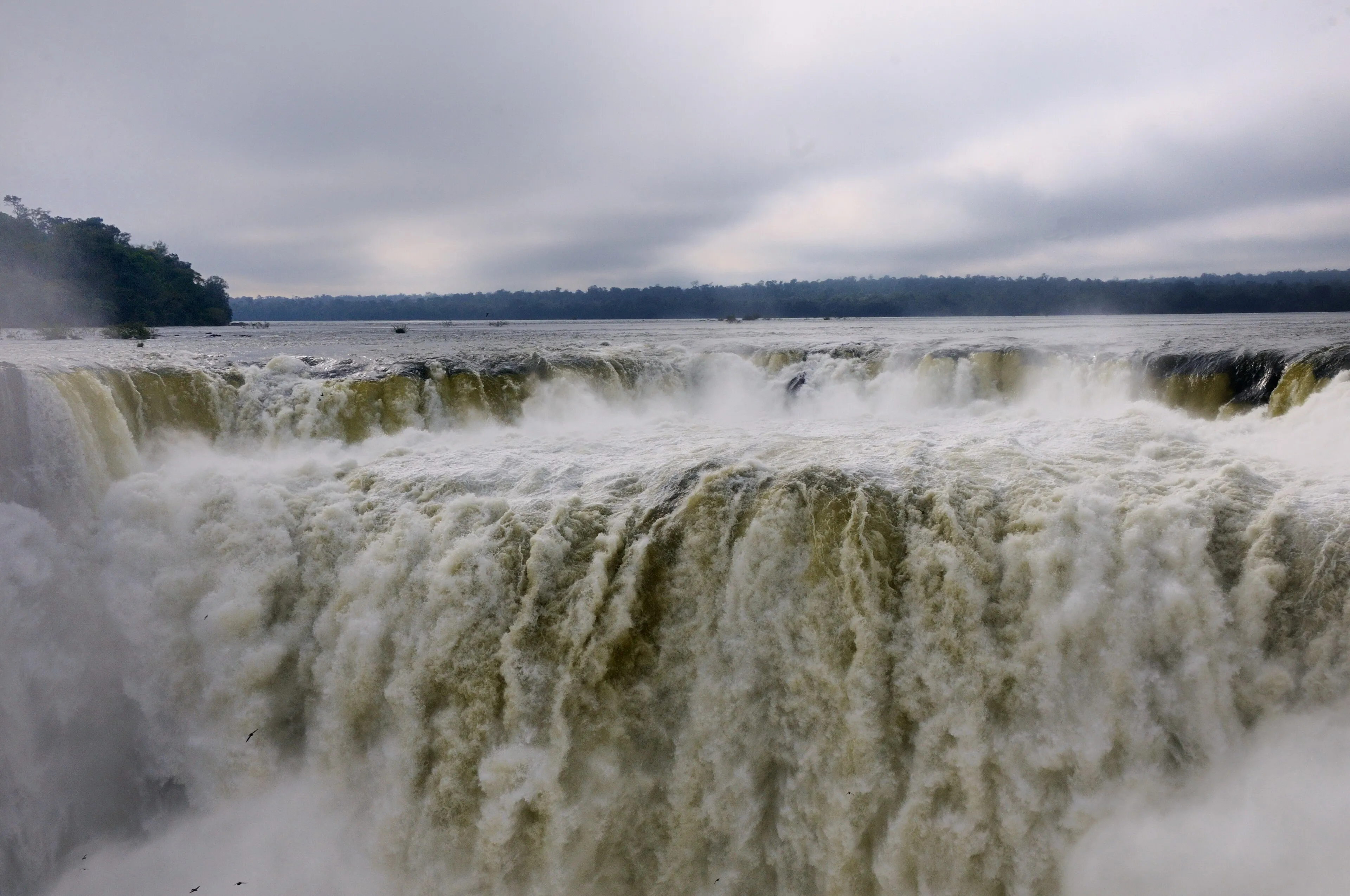
Iguazu is less a waterfall than a horizon of them. UNESCO describes the river dropping vertically some 80 metres in a series of cataracts across a width of almost three kilometres, curving into a great horseshoe at the heart of two national parks — Iguazú in Argentina and Iguaçu in Brazil. The river itself marks the border between the two countries for this stretch, before it joins the Paraná less than 25 kilometres downstream.
The name fits. UNESCO traces it to an Indigenous term meaning “great water”, and the clouds of spray thrown up by the falls permanently soak the river islands and the forest around them. That constant mist creates a humid microclimate where vegetation grows dense and lush right to the edge of the drop.
A forest worth as much as the falls
The waterfalls get the photographs, but the forest is what makes the parks irreplaceable. Together they protect a significant remnant of the Atlantic Forest, which UNESCO calls one of the most threatened global conservation priorities. Around 2,000 plant species and some 400 bird species have been recorded, including the elusive Harpy Eagle, along with several wild cat species and the broad-snouted caiman. On the Brazilian side, UNESCO also lists the giant otter and the giant anteater.
Two countries, two perspectives
Because the falls straddle a border, the two parks offer different vantage points. Argentina’s park, created in 1934 according to the national parks administration, covers more than 67,000 hectares and is also recognised as an Important Bird Area. Brazil’s Iguaçu National Park was added to the World Heritage List in 1986, two years after its Argentine neighbour, and spent 1999–2001 on the List of World Heritage in Danger.
Planning notes
On the Argentine side, tickets are tied to an entry time slot, and the park asks visitors to respect it. We have not yet verified seasonal patterns — such as river levels or rainy months — from an official source, so this page stays in preview until we can. We don’t list ticket prices here; check the official park websites before you go.
Verified practical notes
- Entry time slot: On the Argentine side, visitors are asked to respect the entry time selected on their ticket (Administración de Parques Nacionales (Argentina), checked 2026-10-16)
When to go
Seasonal guidance is still being verified against official sources. We don’t publish season tips, dates or prices until they are.
Share this place
Sources
- UNESCO World Heritage Centre — Iguazu National Park (Argentina) — accessed 2026-10-16
- UNESCO World Heritage Centre — Iguaçu National Park (Brazil) — accessed 2026-10-16
- Administración de Parques Nacionales — Parque Nacional Iguazú — accessed 2026-10-16
- Wikipedia — Iguazu Falls (coordinates only) — accessed 2026-10-16
Last verified 2026-10-16 · Written by WonderAtlas Editors. Original editorial text; no first-hand visit is claimed. How we work.